
Last Updated: October 25, 2026
Quick Summary
You can spot high quality clothing by checking construction details: clean stitching with no loose threads, seams that lie flat and feel secure when tugged, even hems, solid hardware, fabric that holds its shape when bunched, and a lining that moves with the garment. Flip it inside out to check seams and finishing, and use your hands to stretch, scrunch, and rub the fabric.
- Clean stitching, flat seams, even hems, solid hardware, and fabric that holds its shape all signal quality.
- Stretch fabric gently to see if it springs back, and hold it to the light to check for unwanted sheerness.
- Flip garments inside out and look for bound or flat-felled seams, which hold up better than raw edges.
- Check that buttons are securely stitched, buttonholes are clean, and zippers glide without catching.
- Durability comes down to construction, not price, so slow down and inspect pieces in the dressing room.
Table of Contents
- What Are the Signs of Well-Made Clothing?
- How to Check Clothing Fabric Quality
- How to Tell If Clothes Will Last
- The Bottom Line on Spotting Quality
- Frequently Asked Questions
What Are the Signs of Well-Made Clothing?
You know that feeling when something off the rack just feels right? That's not luck, that's high quality clothing, and it's all in the construction.
Here's the thing: quality isn't one single thing. Researchers publishing in the Clothing and Textiles Research Journal found that clothing quality can mean meeting the needs of a specific use, creating a strong first impression, or simply coming down to personal perception. So yes, some of this is subjective. But plenty of it isn't.
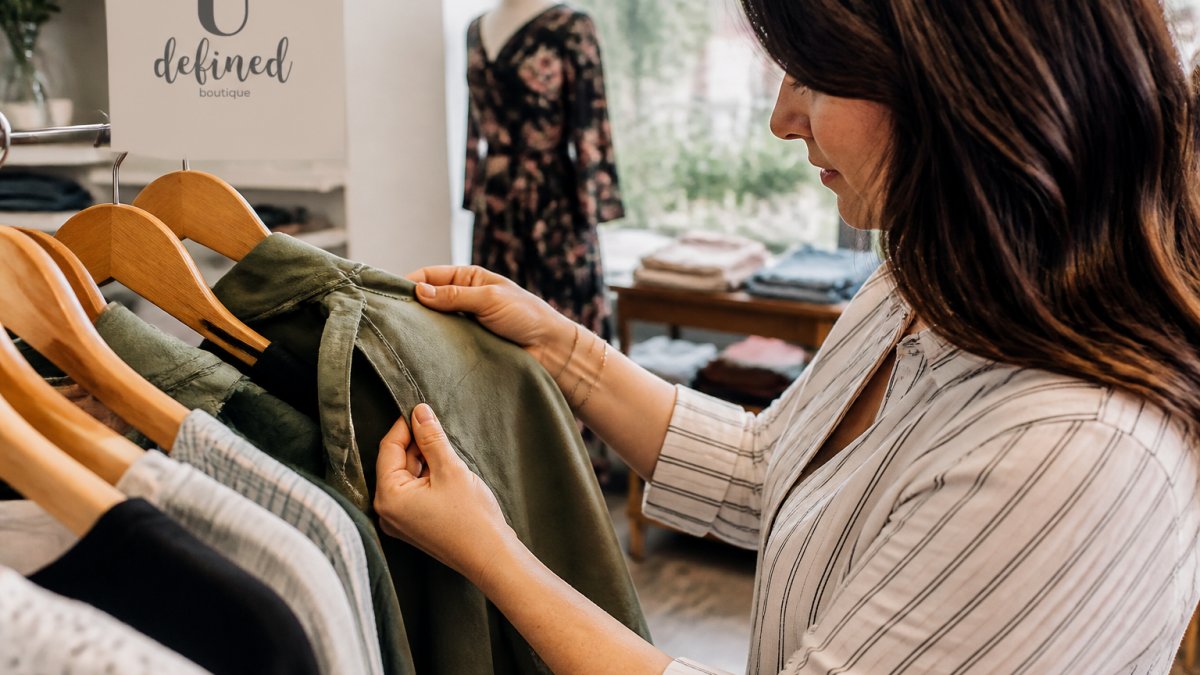
So what should you look for? Quick checks:
- Clean stitching with no loose threads or skipped spots
- Seams that lie flat and feel secure when you tug gently
- Even hems with no wobbling or twisting
- Hardware that feels solid, not flimsy or hollow
- Fabric that holds its shape when you bunch it in your hand
- A lining that moves with the garment, not against it
At U defined boutique, we handle a lot of pieces every week, and these details tell us fast whether something earns its spot in your closet. If it passes the eye test but fails the feel test, trust your hands.
Want the full breakdown? Our guide on how to find clothes that fit perfectly has it.
Here's your quick cheat sheet for the dressing-room check.
| What to check | What good looks like |
|---|---|
| Stitching | Clean, no loose threads or skipped spots |
| Seams | Lie flat and feel secure when tugged |
| Hems | Even, no wobbling or twisting |
| Hardware | Feels solid, not flimsy or hollow |
| Fabric | Holds its shape when bunched in your hand |
| Lining | Moves with the garment, not against it |
How to Check Clothing Fabric Quality
Fabric is the foundation. A gorgeous cut in a cheap fabric will still pill, sag, or lose its shape.
Start with the fiber content label. Natural fibers like cotton and wool behave differently from synthetics, and blends sit in between. Neither is automatically better, it depends on the piece.
Next, use your hands: stretch it gently (good fabric springs back), hold it to the light (see-through when it shouldn't be is a red flag), scrunch it (wrinkles that never relax mean trouble), and rub the surface (instant little balls mean pilling is coming). And a soft feel doesn't always mean quality, some finishes feel amazing in the store and wear thin fast at home.
For more on which pieces are worth it, our post on building a capsule wardrobe you love covers picking quality staples that actually get worn.
How to Tell If Clothes Will Last
Durability comes down to construction, not price. A well-made garment protects its weak points, seams, hems, and closures.
Flip it inside out, that's where the truth lives. Look for bound or flat-felled seams, which hold up far better than raw edges, and check the seam allowance. A skimpy one leaves no room for repair.
Then check the finishing touches: securely stitched buttons, clean buttonholes, zippers that glide without catching. Loose threads and raw edges signal rushed construction.
Care labels matter too, wash resistance, colorfastness, and shrinkage all depend on following them.
And a reality check: tugging and rubbing reveal a lot, but they can't predict repeated laundering. Use them as clues, not verdicts.
The Bottom Line on Spotting Quality
Shopping for high quality clothing isn't about spending more. It's about knowing what to look for so you don't waste money on pieces that fall apart.
McKinsey's State of Fashion 2026 report notes that higher product quality and craftsmanship rank among the top factors for high-net-worth shoppers. Translation: people who can buy anything still care about how things are made. That should tell you something.
Our advice? Slow down in the dressing room. Flip it inside out. Feel the seams. Read the label. Five extra minutes saves you from a closet full of regret.
Frequently Asked Questions
What details should I check to tell if clothing is high quality?
Start with the inside. Flip the garment inside out and look at the seams. Are they finished or raw? Check the stitching density, the hardware (zippers, buttons), and the fabric weight. A well-made piece will have clean seams, even stitching, and hardware that feels solid. Also, feel the fabric. Does it drape nicely, or does it feel stiff and thin? These are the first clues to high quality clothing.
Are natural fabrics always better quality than synthetic fabrics?
Not always. Quality depends on the garment's purpose. Natural fibers like cotton and wool are breathable and durable, but synthetics can be better for stretch, water resistance, or athletic wear. The key is how the fabric is made and how it suits the intended use. A high-quality synthetic can outperform a low-quality natural fiber. Look for fabric composition that matches the garment's function, and check for signs of pilling or snags.
How can I tell if a fabric will hold up after washing?
Check the care label and fiber content. Natural fibers like cotton may shrink, while synthetics can pill. Look for fabrics with a tight weave and a bit of weight. Gently stretch the fabric to see if it recovers its shape. Also, inspect the seams and hems for loose threads. A well-constructed garment with quality fabric will usually withstand regular laundering better than a cheaply made one.
Ready to shop pieces that actually hold up? At U defined boutique, we focus on flattering, easy-to-wear materials and a selection of stylish, unique items you'll reach for again and again. Stop by our Historic Main Street location or shop online, where new styles arrive daily and orders over $150 ship free. Get started with U defined boutique and build a closet you genuinely love.
