
Table of Contents
- How to Measure Body Proportions for Clothing (Grab a Tape Measure!)
- The Big Five: Identifying Your Body Shape
- Best Clothing Styles for Hourglass Figure (Yes, You Can Show It Off)
- Dressing the Pear and Apple Shapes Without Losing Your Mind
- Inverted Triangle and Rectangle: The Shapes That Get Ignored
- Wardrobe Essentials for Every Body Type (Capsule Edition)
- Undergarments, Tailoring, and Budget Hacks That Actually Work
- Conclusion
- Frequently Asked Questions
Last Updated: September 29, 2026
How to Measure Body Proportions for Clothing (Grab a Tape Measure!)
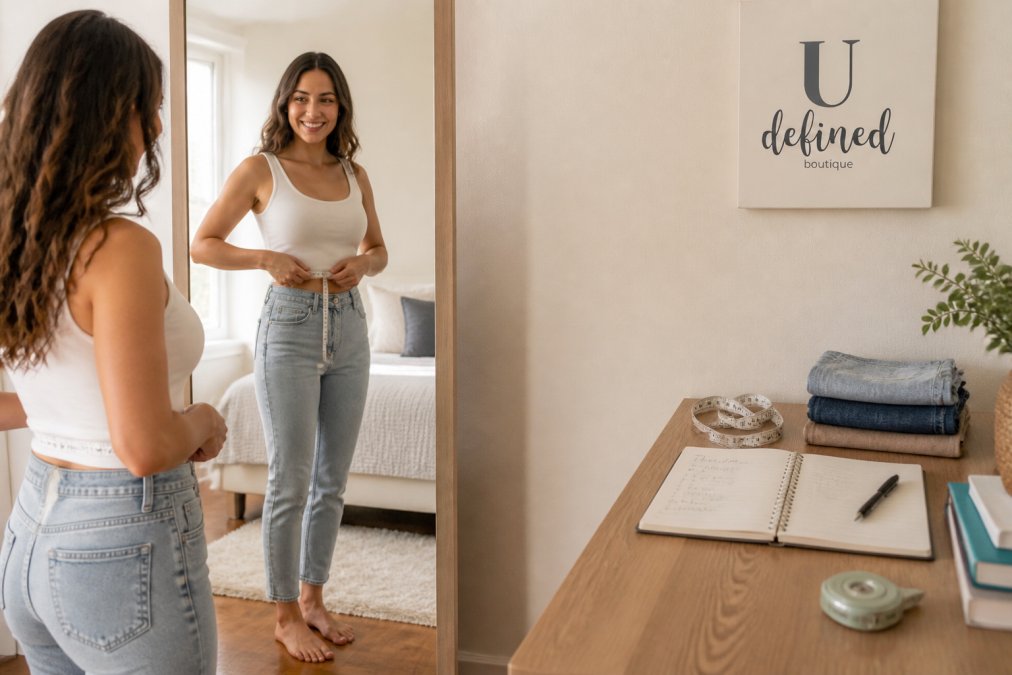
Learning how to dress for different body shapes starts with four numbers and a soft measuring tape. According to the National Institute of Standards and Technology's body measurement guidance, accurate measurements beat guesswork every time, and at U defined boutique we've watched that play out on the fitting room floor for years. Grab a tape measure, wear something fitted, and keep the tape snug but never pinched. Write the numbers down. Your closet is about to get a whole lot friendlier.
Shoulders, Bust, Waist, Hips: The Four Numbers That Change Everything
Measure shoulders across the widest point of your back, bust at the fullest point, waist at its narrowest (usually just above the belly button), and hips at the widest point of your seat. Those four numbers reveal your proportions, and proportions, not size labels, decide what flatters you. A common mistake is measuring over bulky clothing. Don't. Accuracy here saves you a dozen returns later.
The Big Five: Identifying Your Body Shape
Identifying your shape takes about two minutes once you have your numbers. Compare shoulder width to hip width, then check how defined your waist is. That's it. No calculator, no quiz, no drama.
Hourglass, Pear, Apple, Rectangle, and Inverted Triangle
- Hourglass: shoulders and hips roughly equal, waist clearly narrower
- Pear (triangle): hips wider than shoulders
- Apple: midsection carries the visual weight, legs are slimmer
- Rectangle: shoulders, waist, and hips close in measurement
- Inverted triangle: shoulders wider than hips
Here's the thing nobody tells you: your shape can shift over time. Pregnancy, weight changes, and age all move these numbers around, so remeasure every year or so. It's not a life sentence, it's a snapshot.
Best Clothing Styles for Hourglass Figure (Yes, You Can Show It Off)
The best clothing styles for hourglass figure dressing come down to one move: define the waist and let everything else follow. Wrap dresses, belted structured blazers, and high-waisted denim all lean into your natural balance instead of fighting it. Skip boxy cuts that hide your waistline entirely. You earned those proportions.
Dressing the Pear and Apple Shapes Without Losing Your Mind
Pear shapes shine in A-line skirts, structured blazers, and darker bottoms paired with brighter tops, which shifts visual weight upward. Apple shapes get the reverse treatment: vertical lines, open necklines, and flowy layers that skim the midsection rather than cling to it. That's the standard advice, and it's fine, as a starting point.
But here's what almost every style guide skips: your shape isn't permanent. It shifts. Pregnancy, postpartum recovery, menopause, weight fluctuation, and even a new strength-training routine can move your measurements around.
When Your Shape Changes, Your Strategy Changes With It
Postpartum: Your ribcage may stay expanded for months after birth, and your waist-to-hip ratio can shift significantly. Wrap dresses, empire waists, and high-waisted bottoms with stretch are your friends during this window. Don't invest in a whole new wardrobe yet, your shape is still settling.
The Real Rule: Balance, Not Camouflage
Honestly? Most "rules" for these shapes are just suggestions. A pear-shaped friend of mine rocks skinny jeans constantly because she pairs them with a statement blazer. An apple-shaped client wears crop tops with high-waisted wide-leg trousers and looks incredible. Balance is the goal, not camouflage.
Inverted Triangle and Rectangle: The Shapes That Get Ignored
Inverted triangle styling means softening the shoulder line and adding volume below: think tapered trousers, flared denim, and V-necklines that draw the eye down. Rectangle shapes get to play with the opposite trick. Create curves with fit-and-flare silhouettes, color blocking, and belted waists.
Bree High Rise Control Top Distressed →
Wardrobe Essentials for Every Body Type (Capsule Edition)
A capsule wardrobe built for your shape beats a closet stuffed with random impulse buys. The essentials that work across every silhouette:
- One structured blazer that hits at the hip
- Dark-wash denim with real stretch (our Bree High Rise Control Top Distressed Straight Jeans earn their keep here)
- A wrap dress in a neutral you'll actually wear
- Two well-fitting tees you can tuck or knot
- One pair of tailored trousers
| Body Shape | Hero Piece | Why It Works |
|---|---|---|
| Hourglass | Wrap dress | Defines waist, follows curves |
| Pear | Structured blazer | Balances hips, builds shoulders |
| Apple | V-neck flowy top | Elongates torso, skims midsection |
| Rectangle | Belted fit-and-flare | Creates curve where there is none |
| Inverted triangle | Flared jeans | Adds visual weight below |
Undergarments, Tailoring, and Budget Hacks That Actually Work
Here's the truth bomb: the fastest way to change how your clothes fit isn't a new wardrobe. It's what's underneath it. Get the foundation right and half your closet suddenly behaves.

The Bra Is Doing 80% of the Work
A well-fitted bra lifts your bust line, which visually lengthens your torso and changes where your waist appears to sit. That's not magic, it's geometry. Most fitting pros suggest starting with the band: it should sit snug and level around your ribcage, providing roughly 80% of the bra's support, while the straps handle the rest. If your band rides up in the back, it's too loose.
Shapewear: Pick the Right Tool, Not the Tightest One
Seamless shapewear smooths lines under dresses without adding bulk, but the mistake is buying the smallest size you can squeeze into. That creates rollover at the edges, the exact thing you were trying to avoid. Look for pieces labeled "light control" for everyday smoothing and "firm control" only for special-occasion dresses. High-waisted shorts work under fit-and-flare and wrap dresses; a simple camisole handles the midsection under blouses.
Tailoring: The Cheapest Upgrade in Your Closet
A nip at the waist or a quick hem makes off-the-rack pieces look custom. The rule of thumb: if a garment fits in the shoulders and the bust, almost everything else can be adjusted. If it doesn't fit in the shoulders, walk away, that's the one seam most tailors won't touch because it changes the entire structure of the garment.
Budget Hacks That Genuinely Work
- Iron-on hem tape for a quick jeans or trouser hem, no sewing machine required, holds through several washes.
- Swap the buttons on a blazer or cardigan for a fast, high-impact upgrade. Buttons are cheap; the transformation isn't.
- Belt it, a belt at your natural waist creates definition on rectangle and apple shapes instantly.
- Check the return policy before you commit to anything you plan to alter. Once it's hemmed, it's yours.
- Shop secondhand first for structured pieces like blazers and coats. The bones are what matter, and a tailor can adjust the rest.
None of this requires a designer budget. It requires knowing which two or three adjustments actually move the needle on your specific shape, and then actually doing them.
Conclusion
Getting dressed shouldn't feel like solving a puzzle every morning, yet most women are working with a closet that fights their proportions instead of flattering them. At U defined boutique, we curate pieces built around real bodies and real fit, from tummy-control denim to easy, drapey tops that do the work for you. Stop by our Historic Main Street shop or browse online, where new styles land daily and shipping is free on orders over $150.
Frequently Asked Questions
What is the 3-3-3 rule for clothes?
The 3-3-3 rule is a simple packing and wardrobe strategy: three tops, three bottoms, and three pairs of shoes can create dozens of outfit combinations. It works for any body shape because you build around pieces that already fit your proportions. For example, a pear shape might pack three A-line skirts, three fitted tops, and three pairs of comfortable heels or flats. The rule helps you avoid overpacking while still having options that flatter your silhouette.
How do I figure out my body type for clothes?
Grab a soft measuring tape and measure your shoulders, bust, waist, and hips in inches. Write those numbers down. Then compare: if your waist is significantly smaller than your bust and hips, you are likely an hourglass. If your hips are wider than your shoulders, you are a pear. If your shoulders are the widest part, you are an inverted triangle. If your waist is not very defined, you are a rectangle. If your midsection is the widest area, you are an apple.
What are the best necklines for different body shapes?
For an hourglass figure, V-necks and scoop necks highlight your natural balance. Pear shapes look great in boat necks and off-the-shoulder styles to add visual weight up top. Apple shapes benefit from V-necks and deep scoop necks that elongate the torso. Rectangle shapes can wear crew necks and halter tops to create curves. Inverted triangles should try scoop necks and sweetheart necklines to soften broad shoulders. The goal is always balance, not hiding.
How does fabric choice impact how clothes fit my body type?
Fabric matters as much as cut. Structured fabrics like denim and ponte hold their shape and smooth areas you want to minimize. Flowy fabrics like chiffon and jersey drape over curves without clinging. For apple shapes, choose fabrics with some stretch but not too much cling. For pear shapes, a structured blazer on top balances wider hips. For hourglass figures, wrap dresses in soft jersey highlight your waist without squeezing. Always check the fabric content before buying online.